Showing posts with label invasives. Show all posts

Wednesday, June 4, 2025

Naturalist’s Corner - A Black Locust Super Bloom?

Have you noticed the sudden appearance of clusters of white trees in the usual greens of the Driftless bluffs? What’s up? That’s what I said too. I can't recall seeing this phenom in black locust trees other years. Why the sudden proliferation of blossoms? Derrick Mayoleth to the rescue! He wrote an informative post on his Skillet Creek Media Facebook page about what’s up with this very subject. Derrick writes (and photographs and films) extensively on the Dells and Baraboo Hills area of WI where the Driftless area ends and both moraines and unglaciated geological formations tower.  He explores and celebrates the incredible landscapes, trails, parks and opportunities and loves connecting people with nature via education, respectful discussion and inspiring visuals of Wisconsin's beauty. You can also find him at Skillet Creek Photography.  This column is reprinted with permission from his June 2, 2025 Skillet Creek Media Facebook post.

Image - Skillet Creek Media

A Forest Super Bloom?

I’ve heard a lot of comments recently about the white trees everywhere. We’ve all seen plenty of white-flowering trees around Wisconsin, but this year feels different. Some folks are concerned when they see clumps of white trees in the distance. Others are just curious.

You may have seen my story post yesterday, where I said these little islands of white on the hills look just like Minecraft’s Creaking Forest. And honestly, they do. 😉

What we’re seeing could almost be called a “superbloom” of black locust trees. And if you were concerned, you’re not wrong to be. But maybe the reason isn’t what you thought.

Black locust trees are invasive here in Wisconsin. Once established, they can invade forests, upland prairies, old pastures, and roadsides. They spread aggressively by cloning themselves in tight clusters, suckering out from underground roots. In fact, if their roots are damaged, they often spread even faster.

The Wisconsin DNR tells us that neither cutting nor girdling is effective on its own. Burning and mowing can temporarily slow the spread, but long-term, those methods can actually make things worse. I’ll drop a couple of links in the comments if you want to learn more about control efforts.

So why are they standing out so much this year?

Black locust blossoms
Image -Marge Loch-Wouters

Well, the spring weather has been perfect for them. When black locusts get just the right mix of sun and rain, and dodge any late-season frost, they can go a little wild. This seems to be one of those years.

On the upside, their pea-like flowers are beautiful. Black locust blossoms have a sweet, floral scent, often compared to a mix of orange blossom, honey, grape candy, and freshly cut hay. The fragrance really kicks in on warm, humid days.

So no, our forests aren’t dying. But they are being quietly invaded by a showy, fragrant outsider. How’s that for mixed messaging?


Additional Resources:
About Invasive Black Locust - https://dnr.wisconsin.gov/topic/Invasives/fact/BlackLocust

More from the US Forest Service - https://www.fs.usda.gov/wildflowers/plant-of-the-week/Robinia-pseudoacacia.shtml
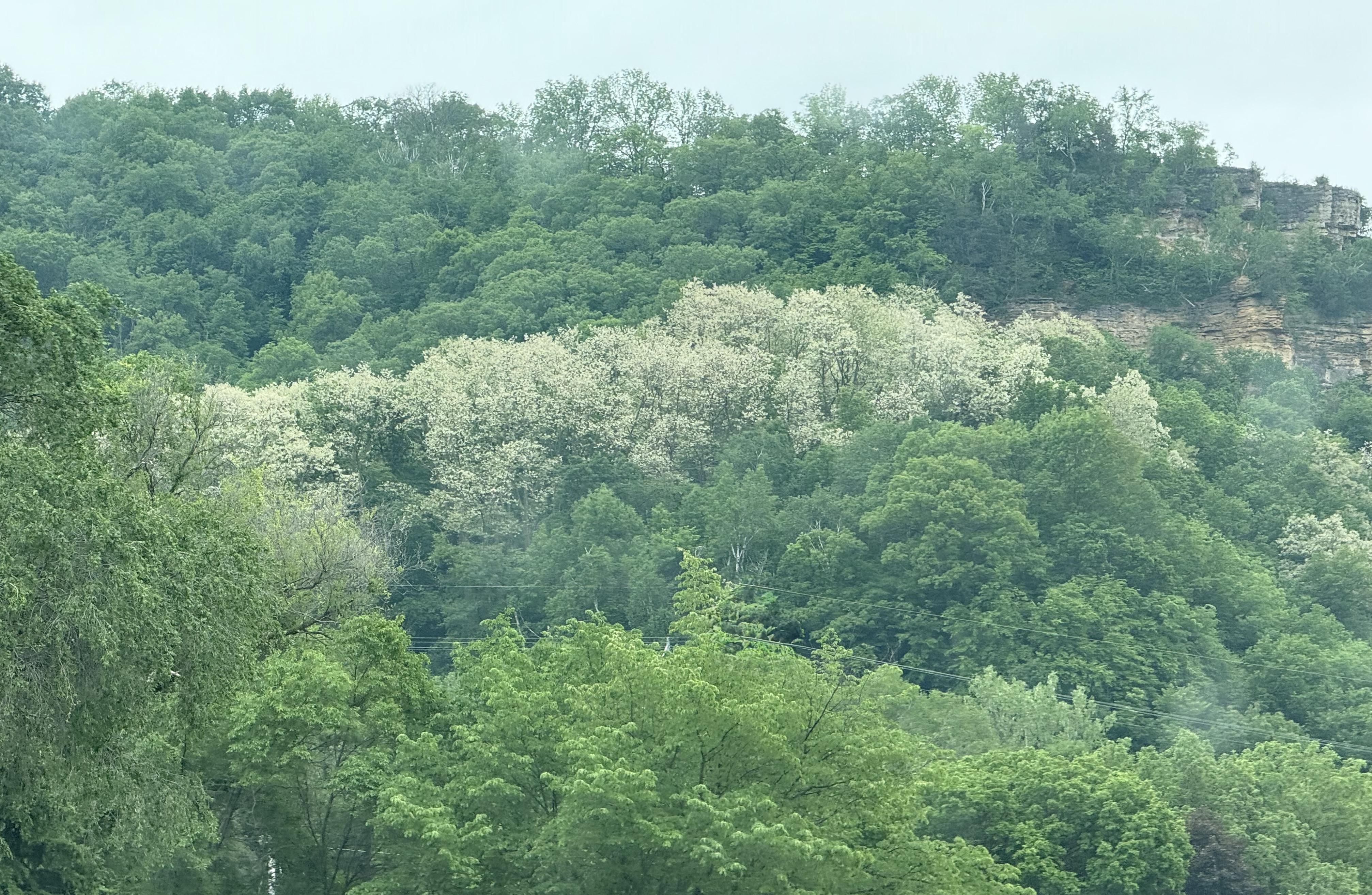
It’s a white-out!
Image - Marge Loch-Wouters


Thursday, May 22, 2025

National Trails Day® is Coming Up

The American Hiking Society sponsors National Trails Day® annually. This year, the designated day is Saturday, June 7. It is a chance not just to get outdoors but also to connect with our community and give back to the trails we love. AHS wants to empower everyone to become trail stewards on any trail, anywhere.

They encourage trail stewardship, something we should all give some thought to. According to their website: 

"Being a trail steward means enjoying, sharing, preserving, and respecting the trails and outdoor spaces we all enjoy. While responsibly recreating on trails is essential, being a trail steward involves more than that — it's about ensuring they remain welcoming, accessible, and well-maintained for everyone now and in the future.
Trail stewards:
  • Appreciate the outdoors and enjoy them responsibly: Admire the trails' beauty while respecting their natural and cultural significance.
  • Leave trails better than they found them: Participate in clean-ups, volunteer for trail maintenance projects, and,, when you head to the trails, ensure you pack out all of your waste.
  • Promote community: Ensure the outdoors and trails are welcoming for all to enjoy, and work to foster a sense of belonging and connection.
  • Advocate for trails: Use your voice to speak out for public lands, trail funding, and trail preservation. These efforts help ensure these spaces are preserved and accessible for future generations.
  • Share the space: Be considerate of all trail users — whether hikers, bikers, equestrians, etc., and wildlife, too, of course!
Being a trail steward is a way to give back to the trails we love to explore, ensuring they remain a source of joy, connection, and adventure for everyone."

So don't just get out on the trails that day - take a trash bag and pick up litter, resolve to volunteer with a city, county or state park to help them with trail work and invasives removal and be a great advocate for making sure everyone can access trails.

See you on the trails!

Saturday, April 12, 2025

Volunteers for Nature Needed

Garlic mustard is overspreading many natural spaces. This tall, fast-growing, and huge seed-spreading plant outcompetes native plant species and quickly takes over areas. 

Early spring in the Midwest, when garlic mustard emerges -and before it sets seed - is the best time to go out and pull this invasive species. It’s pretty easy work. And it can yield some tasty tender leaves for garlic mustard pesto, a popular forager's delight!

If you see a call like the one below sponsored by my City of La Crescent, please consider pitching in as a volunteer for nature. It’s amazing how much we can beat back an invasive like this with a short hour of work together. 

And it’s a great way that we, as hikers, can contribute to the ongoing health and beauty of local natural areas we hike in. 

I'll be at this garlic mustard pulling project - and hope I can pull this invasive alongside you!


Sunday, June 16, 2024

I Spy on the Trails - June 1-15, 2024

Checking plant IDs with Jon Rigdon
at TPE Marowski Bluff hike
Image Nola Larson

I could characterize these two weeks as "giant learning labs" for me. So much of my time outdoors involved guided hikes sponsored by The Prairie Enthusiasts (TPE) or the Natural Resource Foundation of WI (NRF). Add in a NRF canoe trip in the backwaters of the Mississippi  near Ferryville WI and you can say I really went to school.  

Each of these learning opportunities was powerful. I went on three TPE guided hikes. The knowledgeable TPE members and trip leaders revealed the history of both Mound Prairie and Marowski bluffs. They also eagerly identified rare plants and shared their knowledge of these and their work in prairie restorations.

Nicky Buck on
He Mni Cha Bluff

In the case of the TPE-sponsored hike on He Mni Cha (formerly known as Barn) Bluff in Red Wing, we learned about Dakota history,  and use of prairie plants in healing and medicine from our guide Nicky Buck, a member of the Prairie Island Indian Community. She also helped us see the connection between land and people and caring for the land.


Unbloomed death camas
Mound Prairie SNA
All the TPE hike leaders pointed out rare plants and the interdependence of these plants on each other. These remnant hill prairies are preserved by the good work of teams of TPE volunteers who work on the bluff prairies to restore them to health and eradicate non-native invasives. Each prairie was a marvel of diversity and rare plants.

A final TPE-sponsored hike on June 15 introduced us to the recently acquired Marowski Bluff near Ferryville. There is much restoration work to be done there. We hiked around up and down this steep praries for less than than a quarter mile. Even so, the plant list for that hike (listed below) was eye-opening.  Spectacular views of the river and IA bluffs greeted us on the steep prairie. While we didn't hike far, we learned tons about how the prairie was acquired, plans for the restoration and the importance of prescribed fire on this fire-dependent ecosystem. Kudos to TPE folks who worked so hard to acquire and now restore this land!


Natural Bridge rock formation

Biologists at the NRF Natural Bridge State Park and SNA trip also shared history of the area as well as plant identification. The park is experiencing an infestation of spongy moths (formerly known as gypsy moths). We learned about their life cycle as well as efforts to eradicate them using natural methods. It was odd walking through the forest to the constant and insistent pitter-patter of spongy moth caterpillar droppings.

Luckily, this trip ended with an opportunity to learn more about native bumblebee species, their life cycle and identifying marks. I am pumped to try my new bumblebee ID skills in the field! You can up your skills by visiting WI's Bumblebee Brigade webpage to help learn more about and identify our local bumblebees.

Atop Mound Prairie Bluff
with Scott Leddy our TPE guide
If you haven't lately, I highly recommend going on a guided hike. You'll learn a ton from really knowledgeable subject experts while in the field. You can find a monthly list of learning opportunities on the last week of each month for the next month in my monthly "Let's Get Hiking and Learning" column. You can find June's events here.


On the phenology front, the weather over these two weeks was sunny and in the 70s with a few days of rain scattered throughout. I appreciated the rain so I could catch up on reading,  blogging and landscape chores around the homefront!

The birdsongs were quieter in the open prairie bluff areas (and we were out later) than in the forested areas I often hike in. Despite some rain days, there were plenty of days to hit the trails and see the wonder of June in the Driftless area!

Because each of these two week's of hikes was so unique, I decided to split out the plant life I encountered into separate sections. 

Hiking tip: the dry sand prairies in the Driftless area are particularly glorious right now and anyone of any ability can walk through the Trempealeau Wildlife Refuge, Holland Sand Prairie, Mathy Quarry and Hixon Forest prairies. You'll be gobsmacked by the floral exuberance.

Plants
Mound Prairie SNA, MN (TPE) - hill prairie
  • Clasping milkweed
    Small skullcap
    Image -Betsy Knowles

  • Short green milkweed
  • Narrowleaf milkweed
  • Whorled milkweed
  • Cream white indigo
  • Small skullcap
  • Palespike lobelia
  • Harebell
  • Prairie smoke
  • Fringed puccoon
  • Yellow salsify
  • Death camas
  • Black-eyed Susan
  • Yellow star grass
  • Blue-eyed prairie grass
  • Ox-eye daisy
  • Flowering spurge
  • Prairie fleabane
  • Lyreleaf rock cress
  • Prairie groundsel
  • Wood betony
  • Leadplant
  • Prairie rose
  • Pasque flower leaf
  • Horsetail
  • Ninebark

Natural Bridges SNA, WI (NRF) - hardwood forest/wetlands
  • Smooth rockcress
    Eastern giant swallowtail
    Natural Bridges State Park
  • Mayapples
  • Poison ivy
  • Yellow salsify
  • Nettles
  • Upright carrion flower
  • False Solomon’s seal
  • Lady fern
  • Rock cap fern
  • Ebony spleenwort
  • Bulblet bladderfern
  • Spiderwort
  • Angelica

He Mni Cha (Barn) Bluff, MN (TPE) - hill prairie
  • Burdock root
    Ground plums
    He Mni Chi Bluff

  • Pasque flower ( unbloomed)
  • Leadplant
  • Ground plum 
  • Hoary verbena
  • Wild prairie rose
  • Penstamon 
  • Rough blazing star (unbloomed)
  • Candle anemone
  • Orchard grass
  • Canadian black snakeroot
  • Yellow salsify
  • Prairie groundsel

Holland Sand Prairie, WI  - sand prairie
  • Spiderwort 
    Swallowtail butterfly on hoary puccoon
    Holland Sand Prairie

  • Prairie smoke
  • Large beardstongue
  • Hairy beardstongue
  • Yarrow
  • Lupine (leaves and seed pods)
  • Candle anemone
  • Prairie June grass
  • White sagebrush
  • Carolina larkspur
  • Rough blazing star (unbloomed)
  • Hoary alyssum
  • Hoary puccoon
  • Leadplant
  • Wild bergamot (unbloomed)
  • Canada goldenrod (unbloomed)
  • Clasping milkweed
  • Common milkweed
  • Purple coneflower
  • Ox-eye daisy
  • Stiff goldenrod
  • Red sorrel

South Park, Houston MN  - hardwood forest/remnant hill prairie
  • Death camas
    Death camas
    South Prrk, Houston

  • Harebells
  • Lady fern
  • Interrupted fern
  • Sensitive fern
  • Maidenhair fern
  • Green milkweed
  • Upright carrion flower
  • Sweet cecily (past bloom)
  • Jack-in-the -pulpit (past bloom)
  • Canadian honewort
  • Flowering spurge 
  • Hoary puccoon (past bloom)
  • Bastard toadflax (past bloom)
  • Stiff tickseed
  • Canada ginger (past bloom)
  • Leadplant
  • Candle anemone
  • Scarlet elf cap
  • Dryad’s saddle
  • Oyster mushroom
  • Coral fungi
  • Haploa moth
  • Many butterflies who wouldn’t stay still for ID ;>

Marowski Bluff, WI (TPE) - hill prairie
  • Whorled milweed
  • Wild germander
  • White snakeroot
  • Blackberry lily (non-native)
  • Goatsbeard
  • Coreopsis
  • Wild bergamot
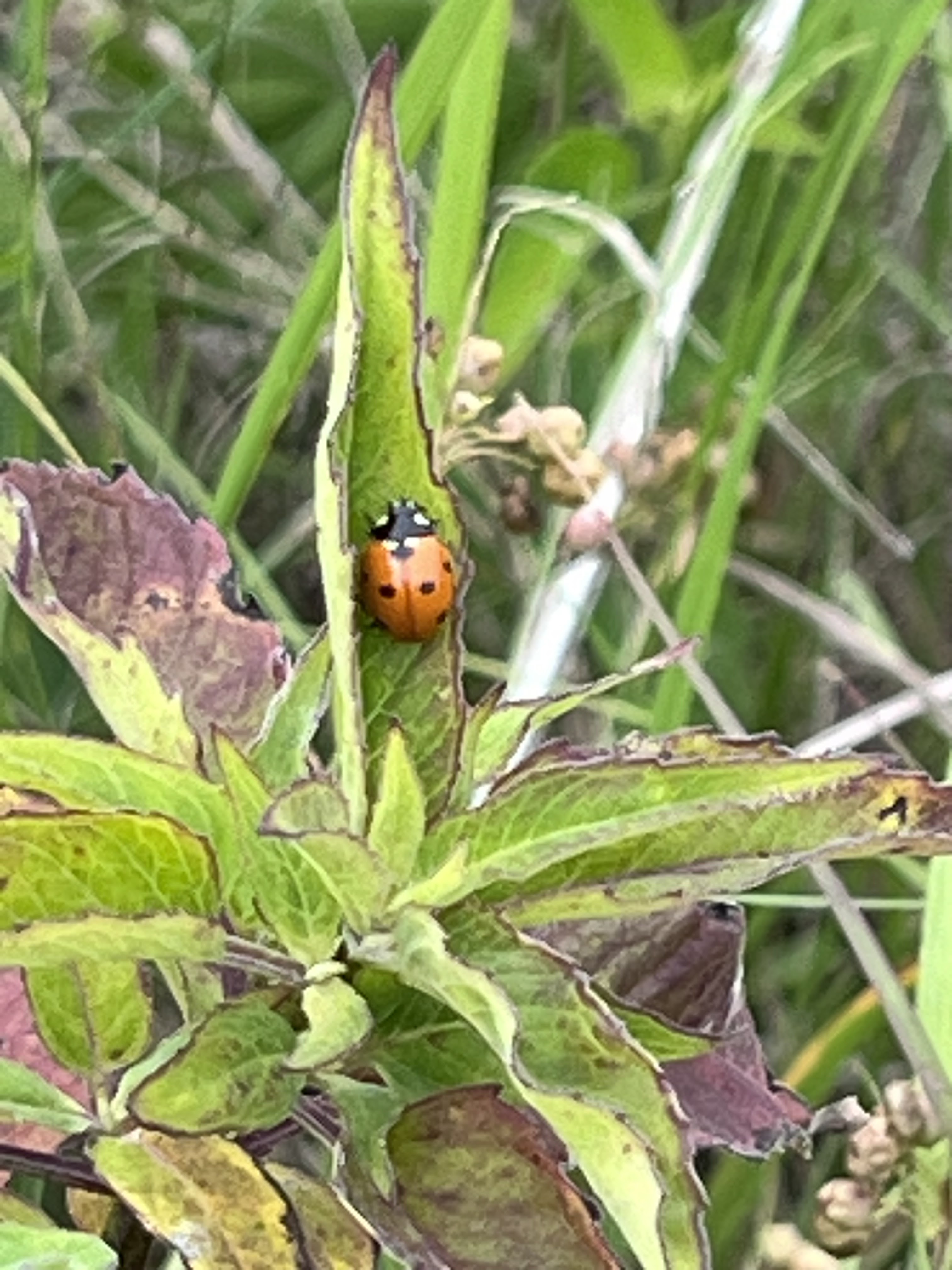
    Seven-spot ladybird on wild bergamot
    Makowski Bluff

  • Virginia mountain mint
  • Leadplant
  • Skyblue aster
  • Silky aster
  • Common boneset
  • Northern bedstraw
  • Licorice bedstraw
  • Eastern bedstraw
  • Prairie dropseed
  • Prairie brome
  • Ground cherry
  • Tall thimble weed
  • Pussy toes
  • Hoary puccoon
  • Bloodroot
  • Mayapple
  • Canadian honewort
  • Harebells
  • Prairie junegrass
  • Flowering spurge
  • Grey headed coneflower
  • Rough blazing star
  • Wood sorrel

Wildlife
  • Snowy egret
    Spongy moth caterpillar

  • Great blue heron
  • Prothonotary warbler
  • Yellow warble 
  • Field sparrow
  • Indigo bunting
  • Red-eyed video
  • Yellow-throated vireo
  • Eastern peewee
  • Eastern towhee
  • Wood thrush
  • Yellow-bellied sapsucker
  • Hairy woodpecker
  • Blue jay
  • Cardinal
  • Robin
  • Rose-breasted grosbeak
  • Wild turkey 
  • Tufted titmouse
  • Indigo bunting
  • Scarlet tanager
  • Beaver
  • American Eagle
  • American pelican
  • Eastern giant swallowtail
  • Tiger swallowtail
  • Harvestman spider
  • Spongy moth caterpillar
  • Seven-spot Ladybird


What are YOU noticing on your hikes?

Two weeks of hikes:
Mound Prairie SNA, Hokah, MN; Natural Bridge State Park, North Freedom, WI; He Mni Can (Barn) Bluff, Red Wing; Riverside Park, La Crosse WI; Holland Sand Prairie, New Amsterdam, WI; South Park, Houston MN; Marowski Bluff, Ferryville WI 


Heading up the steep prairie
at Mound Prairie SNA

The "I Spy on the Trails" column is a phenology (the study of seasonal changes in plants and animals) journal to chronicle year-round the weather, plant life and wildlife I observe while hiking. It is very useful in helping me compare observations from year-to-year. The column is published monthly from September through April and then twice-a-month from May through August when warm weather brings the natural world back to vibrant life.   

                                      Images, unless otherwise noted - Marge Loch-Wouters

Sunday, December 31, 2023

I Spy on the Trails - December 2023

Our first snow of the season in early December was a fine, wet 2 inches. But with temps in the mid-30s and 40s, it was gone before we knew it. Temperatures remained stubbornly high in the high 30s and 40s - even reaching the 50s at times - throughout the month. By Christmas week, only 14.8% of MN had any snow cover. Drought is hard.

We only had a few days this month of below freezing (32F) temps -invigorating, not discouraging on the trails. The rest of the month we had temps consistently 20-25 F higher than average. Early fall forecasts for this time predicted a drier, warmer winter with El Nino disrupting the normal weather patterns. 

According to meteorologist Paul Douglas, it is shaping up to be "probably the warmest December on record for most of Minnesota."  Climate change also is a factor, with 2023 now the warmest year on record globally. It gives me great pause. 

On the positive side, these lingering warm days made for some great hiking days in this prolonged shoulder season. As I've mentioned in a November "I Spy" post, with leaves down and undergrowth dying back, many treasures draw our eyes - from ferns and fungi to hidden rocks and geological features. I am constantly stopping on my hikes to explore, examine and admire.

Also on the plus side, the warmer temps have allowed invasives control work and prairie burns to go longer. Buckthorn eradication work was done in Vetsch Park and Stoney Point in La Crescent by the Natural Resources Advisory group and city staff. The Friends of the Blufflands and Prairie Enthusiasts did a number of burns, seeding and invasives removal across the river in the Wisconsin bluffs. Other groups did the same. It's a never-ending battle so extra days to get this work done makes a huge difference.

Below are some pictures of what I spied on this month's hikes. Happy new year and see you on the trails!


What are YOU noticing on your hikes?

Month of hikes: Vetsch Park, La Crescent MN; Trempealeau Wildlife Refuge, Pine Creek Trail, Trempealeau, WI; La Crosse Marsh trails, La Crosse WI; Riverside Park, La Crosse WI; Pickwick Quarry, La Moille MN; Beaver Creek Valley State Park, Hole in the Rim Trail, Caledonia MN; Yellow River State Forest, Luster Heights trails, Harper’s Ferry  IA; Riverside Park, La Crosse WI; Hixon Forest Hickory Trail, La Crosse WI;  Snakeroot Rail, Mathy Quarry, La Crosse WI: Beaver Creek Valley State Park, Trout Stream Trail, Caledonia MN; Veteran’s Park, Eagle Bluff access trail, La Crescent, MN 


The "I Spy on the Trails" column is a phenology (the study of seasonal changes in plants and animals) journal to chronicle year-round the weather, plant life and wildlife I observe while hiking. It is very useful in helping me compare observations from year-to-year. The column is published monthly from September through April and then twice-a-month from May through August when warm weather brings the natural world back to vibrant life.   


Images - Marge Loch-Wouters, Nola Larson


Friday, August 11, 2023

Upper Hixon Forest (WI) Remnant Prairie Amble/Hike

Recently I participated in a hike guided by Friends of the Blufflands to see remnant prairies and the work that goes into maintaining them. 

It's easy to think, when we are at an amazing overlook or a healthy prairie is spread out before us or the view is unobstructed, that it just "comes that way." But far from it. In order to have prairies and overlooks, maintenance and care is required. On this hike we found out how. 

Hikers getting up close to the Zoerb prairie


Jon and Mike explaining the hike plan

Pat Wilson, president of the Friends, introduced Jon Rigden and Mike O'Brien, who led the group of interested hikers on a 2 mile hike to see three prairies along the rim of upper Hixon Forest in La Crosse. Two of the prairies, Zoerb and Lookout, are actively being restored and maintained by members of the Friends and other volunteers and one (Birch) has not been restored. The contrast could not have been more stark.


Birch Vista is overgrown without care

The first prairie we came to was the Birch on the Birch trail spur off the Bicentennial Trail. This is a prairie remnant that hasn't been worked on in at least 5 years. The view is degraded and the prairie is difficult to see. It is obstructed by buckthorn, black locust, oriental bittersweet, sumac and other invasives. It is so overgrown that a bench that was there had to be moved back. It was an eye-opening example of what a prairie that is not being maintained looks like.


One of the restored prairies

We continued along Vista Trail to Zoerb and Lookout prairies which have been in the process of being restored and maintained by the Friends of the Blufflands for the last four years. Vive la difference!

Fire, consistent invasives control and much sweat equity have made the difference. These two prairies have been burned regularly which helps to suppress the woody invasives and clear the land so native prairie plant seeds can once more sprout up. This is an essential step in keeping all prairies healthy. Small refugia areas are left unburned within the burn site to preserve insect and small critter species so they can re-populate the burned areas as the plants grow back. 


Girdled trees in a buffer zone


Invasives are cut and treated - often many times to reduce and eradicate them. Select tree species are carefully evaluated and removed to maintain light and restoration goals. This work is done on the prairie but also in buffer zones leading up to the prairie. This helps protect the prairie with a ring of healthy forest and savanna. Trees that have a tendency to send out clones when sawed down are carefully girdled and left to slowly die. This prevents them from sending out the clones. The crew returns once they are dead and removes them.


It's so easy to take for granted the prairies and views we see as we hike. A group like Friends of the Blufflands definitely makes that magic happen through informed decision making, careful research, applied scientific knowledge, hours and hours and hours of hard work and dedication. I invite everyone to support groups like this through donations or volunteering.

And, of course, after going on this guided hike that was so beautiful and informative, I guided a gentle Amble hike there as soon as I could. It is a fantastic hike that is great for kids and adults. And for those that want more mileage, continuing on the Vista trail brings you to additional prairies along this "string of pearls" prairie hike. Read on for the hike deets.

City of La Crosse Map
THE HIKE
A rolling, hilly 2.3 mile loop-hike takes you to three remnant prairies and stunning vistas on top Hixon Forest. There is an elevation gain of slightly over 250 feat so taking it slow gets you to big rewards. Take the Bicentennial trail left at the trailhead until you come to Birch Loop and the first overgrown vista. Finish the Birch loop and turn left onto the Vista trail with spurs to Zoerb and Lookout vistas, which are beautifully maintained prairie remnants. From the Lookout vista spur, retrace your steps back to Vista trail, turn right and head back where you hiked in until the trail branches left away from Birch and back up to the trailhead via Vista. For more miles, after the Lookout spur, turn left on Vista and wind your way to additional prairies on that hike and at Miller Bluff.

The Location: N2788 County Rd FA, La Crosse WI
From La Crosse Main St, head up Bliss Rd, veer left past the Alpine Inn to Cty Rd FA. Turn left on FA and then right at the parking lot for the NOAA weather station. Once parked, cross FA to the west and walk down a short hill to the trailhead and map. Note: at the corner of F and FA there is an old field full of planted oak trees as a reforestation project of Friends of the Blufflands.

Additional posts describing Hixon Forest trails:

Images, unless noted - Marge Loch-Wouters

Looking for more area hikes? Please stop by the web version of the blog and under the "Labels" tab on the right hand side of the blog, click on "find-a-hike". There are over 75 hike descriptions and lists of hikes to try!


Friday, May 5, 2023

Death to Garlic Mustard!

I am a member of our city's Natural Resources Advisory Group (NRAG) It is a great fit with my love of the outdoors and MN Master Naturalist volunteer certification. This science-based advisory group helps the city navigate care of our two blufflands parks as part of our charge in preserving the natural resources in our community.

Before- garlic mustard
Our group is tasked with planning and helping with invasives control in the bluffland parks. Like many wild areas, our bluffland parks have buckthorn, bittersweet, russian elm, garlic mustard, dame's rocket and a few other pernicious non-native species scattered in areas throughout them. This year NRAG is tackling two of the invasives.

Garlic mustard has been our spring focus in Vetsch, one of our city bluffland parks. We have had a total of three 1.5-2 hour work days over a 10 day period to address three large patches. The crews have varied from 3-8 people. 

Working in early spring with rainy weather and before the plants set their flowers allowed us to quickly clear large swaths of each patch of young plants (which are easily pulled out with their roots intact, a major plus). In consultation with our county and DNR experts, our city is responsibly disposing of the bags of pulled garlic on site to prevent any re-seeding.

After garlic mustard pull

We weren't able to completely clear two of the patches. This first year pull "experiment" will help us plan more strategically next year. One thing we hope to do is recruit more people over more days for an hour or two shift.  The more people, the more areas we can clear completely. 

This is work that will be ongoing as we return next year to pull to clear more, monitor these sites and add others in coming years. In the fall, we will be going after targeted areas of buckthorn to begin the work on eradicating that. These projects are not one-and done. They take commitment over a number of years to help stop the spread.

We cleared 1/2 this patch in 2 hours!

If you ever have an opportunity as a hiker or outdoor user to step up as a volunteer, your 1-2 hours will make a difference in preserving and keeping healthy a vital part of the outdoors. 

I hope you will!


All images, unless noted - Marge Loch-Wouters