Showing posts with label wetlands. Show all posts

Monday, August 3, 2026

Nature Sneak Peek - August 2026

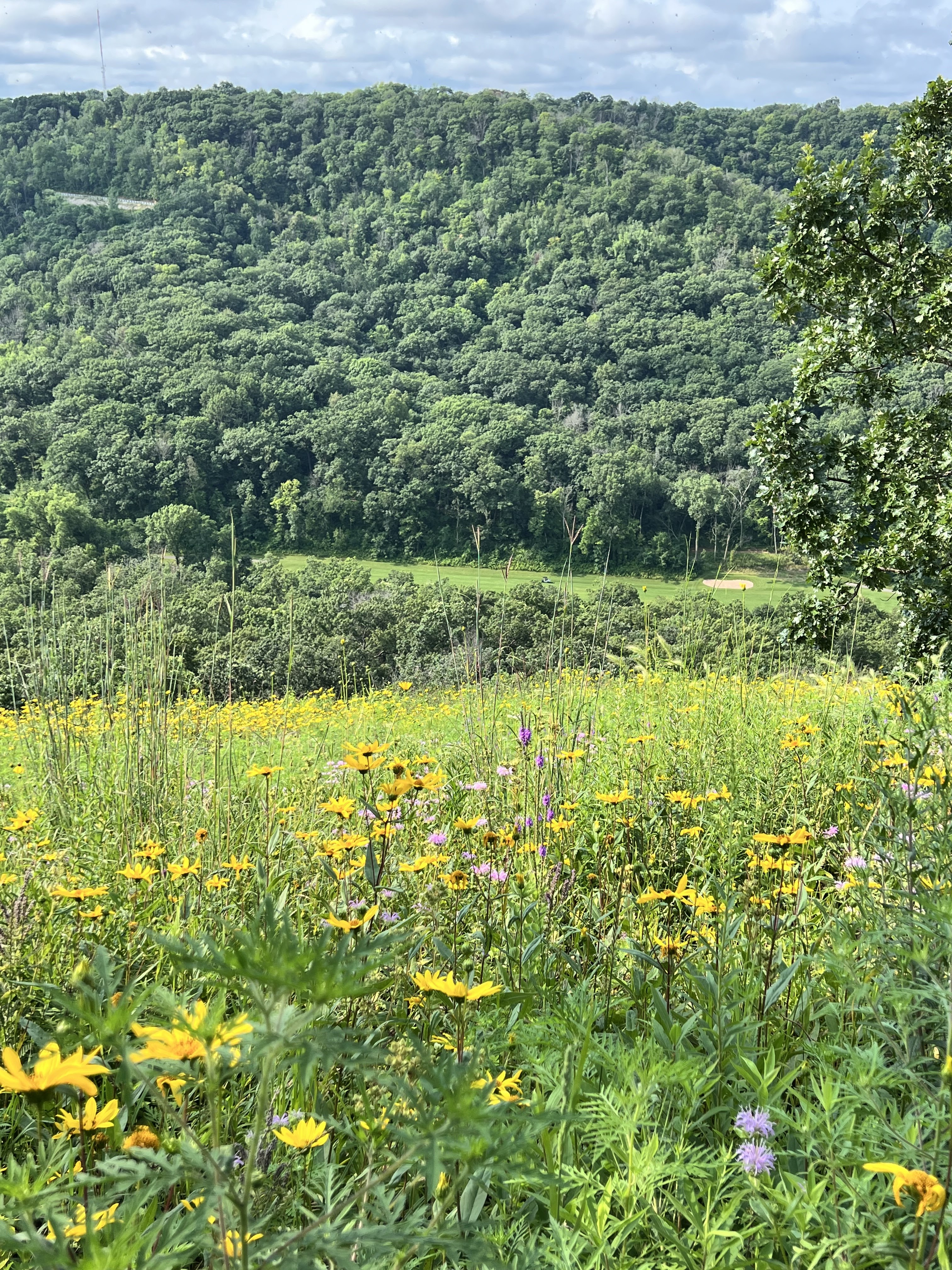
Tall grass prairie at Frontenac State Park
Image - Pamela Miller

The first weeks in August are always special. August 1 is the midpoint of summer, halfway between the solstice and the coming  autumn equinox. This day, Lammas or Lughnasadh, has long been celebrated as a harvest festival. Our gardens and farmer's market, lush with vegetables and fruits, are a continuing testament to this day.

Monarch on blazing star

Days are inexorably growing shorter. Already there are signs from birds and waterfowl that the busy season of mating and raising young is morphing into preparation for coming migration as daylight decreases. Plants and insects are responding as well to decreasing daylight  - we'll have lost over two hours of daylight since solstice by the end of August.

But there is plenty of activity during the dog days of August. Let's look at what you might you see on the trails this month.

Prairies

Big bluestem grass and
coneflowersgray-headed

Tall Grasses - bluestems, yellow indiangrass, Canada wild rye and eastern bottle brush are beginning to dominate in the prairies. Shorter grasses like prairie dropseed, purple lovegrass and side oats grama are also present.

Goldenrods - in the Driftless regions of Wisconsin, Minnesota and Iowa, there are between one and two dozen distinct species of this forb. While they are often tough to tell apart, their distinct butter yellow flowerheads lend their sunny color to August prairies.

Sunflowers - are clocking in for the month. They too have many varieties and can be found in sunny spots in the woods as well.

Blazing Stars - their pink-purple stalks are prominent in prairies this month. A favorite of butterflies, bumlebees and humans too!


Margined calligrapher hoverfly
on grooved flax

Insect Life
- is positively bursting in August. Butterflies, flies, wasps, beetles, bumblebees and native bees are nectaring and gathering pollen at warp speed on all the yellow, white and purple blossoms. Their predators - damselflies, spiders and dragonflies are also busy! It's a perfect time to catch them on blooms as your hike. The sound of grasshoppers, katydids, and crickets are fast replacing the songs of nesting birds, many of whom are gathering  for the beginning of migration. 


Woodlands
Ghost pipes - not a fungus
Ghost pipe
- this ghostly white plant is easily confused with a fungus. While they don't need sun, they also don't need chlorophyll. Instead, they tap into the mychorrizal network to get their food. Once established, they will reappear in the same spot each year.

Mushrooms and fungi - the damp, humid nights and heavily shaded forest floor of August are perfect to support the explosive growth of many types of mushrooms, fungi and molds. Chicken of the woods, russela, ink caps, coral fungi, slime molds, jelly fungi are all lurking, ready for you to find and identify. One of my favorites is lobster mushroom which is formed when a parasitic mold takes over a russela or inkcap mushroom changing not ony its appearence but also taking it from non-edible to edible. Ah, nature!


Trees - the changing light is also beginning to slow the chlorophyll production in deciduous leaves. You will start to note later in the month that the bold greens of the canopy becomes slightly less vibrant and often take on a hint of gray. While the leaves will remain on most trees throughout September, the road towards fall will begin as August comes to the end.


Wetlands
Jewelweed - have you been marking where patches of this flower are? Good. Because now it's playtime. The lovely orange and yellow trumpet-shaped flowers are now going to seed. And nothing is more fun for kids and grown-ups than popping their seed covers and watching the seeds spring out.


Frogs - spring peepers often still have something to say! While no longer mating calls, their call can be heard this month. Listen too for tree frogs in woods adjoining wetlands. You may also hear their call as well. And this is the month you may see some tree frogs on your doors or windows. Clever hunters that they are, they pursue the insects attracted to your lights at night to catch easy meals. 

Graphic courtesy earthsky.org

Finally be sure to look up! The Perseid Meteor showers which began in mid July will be peaking August 12-13. Fortunately, these dates coincide with a new moon so the sky will be marvelously dark. While the meteors originate in the constellation Perseus, thay can be spotted in any part of the night sky.


No matter where you go this month, be curious. Take some extra time to look and see what you can see along the trail. You’ll be delighted!

Images, unless noted - Marge Loch-Wouters

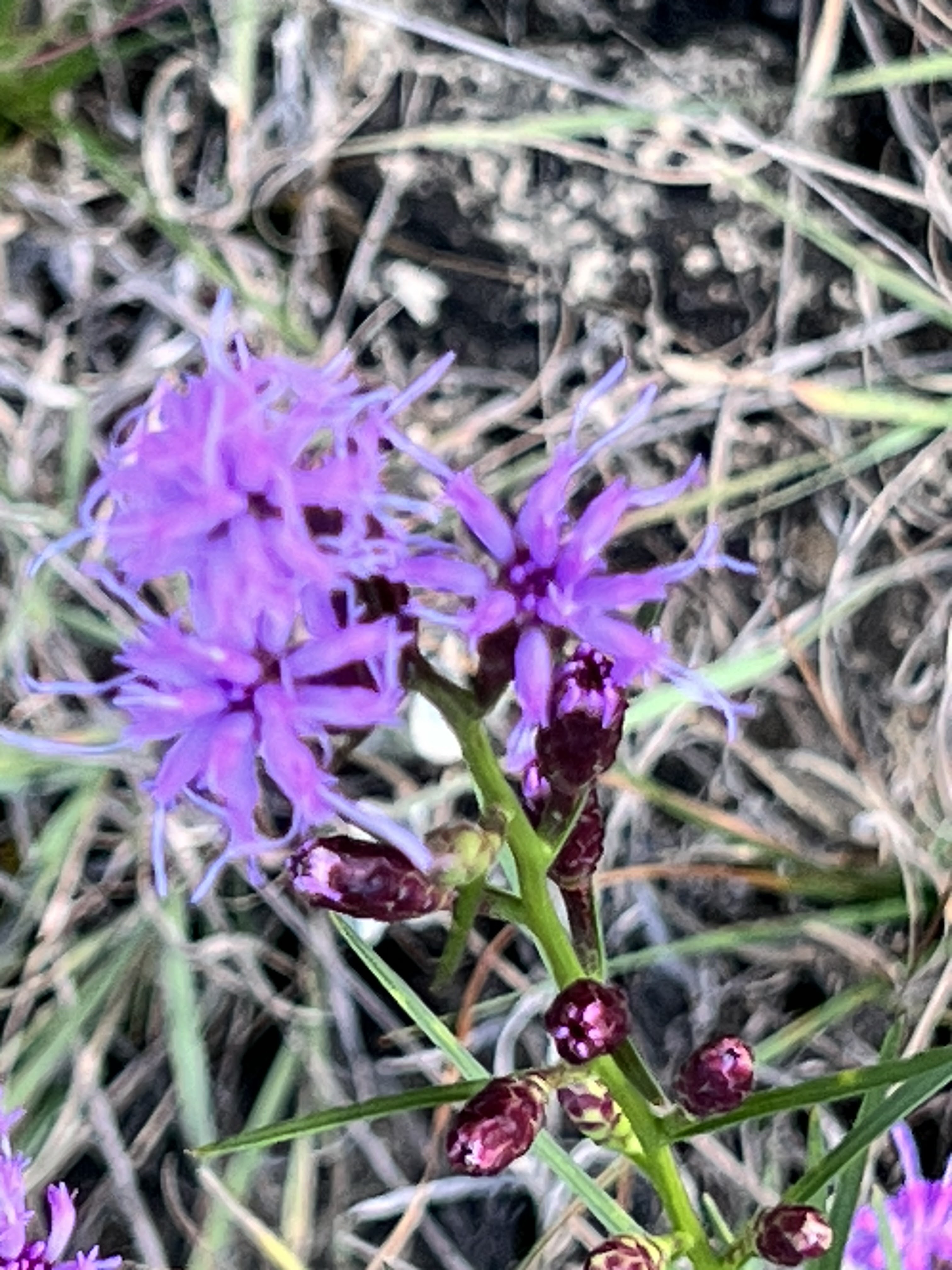
Blazing stars on an August day - Holland Sand Prairie
Image - Kris Lawson

You can read my quarterly column on seasonal hiking suggestions in Inspire(d) Driftless Magazine available online or pick up a free copy at businesses and organizations around the Driftless areas of Minnesota, Wisconsin and Iowa.


Thursday, July 2, 2026

Nature Sneak Peak - July 2026


July hiking and nature observations are always a treat, despite the heat and humidity. Wetlands, woods and prairies all have interesting plants and wildlife to find.


Like the blooms on the common milkweed on the left, found widely throughout the Driftless area, both we and wildlife are attracted to the flowers of so many plants.

Here are a few July highlights to keep your eyes out for on the trails.


Prairies
Rainblow of Blooms - the prairies are bursting with colorful flowers this month
  • Pink - Deptford pinks and purple poppy mallows have an almost neon brilliance
    Tiny Deptford pink
  • Yellow - prairie coreopsis, black and brown-eyed Susans, sunflowers, evening primrose, cinquefoils, and partridge pea are just a few of the yellow flowers you'll see this month
  • Orange - butterfly weed is always a star, not just for its flowers but also for the pollinators it attracts
  • Blue/purple - lobelia, purple prairie clover, harebells, wild bergamot, hoary verbena
  • White - false boneset, yarrow, white prarie clover, spotted bee balm
  • Gray - Leadplant - also once known as "devil’s shoelaces" because of its deep taproot that can be as long as 15 feet which made it difficult for farmers to plow under - is a sure sign of a healthy prairie The white hair on its leaves gives it a downy appearance. It has just started it's brief blooming period so don't miss it.

Plus keep your eye out for the towering flowers and grasses - yellow cup plant and compassplant, pink Joe-Pye weed and common milkweed, and the greens of big bluestem, indiangrass and Canada wildrye

Want to learn more about the above flowers? Stop by Minnesota Wildflowers webpage or Online Virtual Flora of Wisconsin.

White-faced meadowhawk dragonfly

Damselflies and dragonflies are whirring around the prairie. These tiny predators are great mosquito hunters. Wisconsin alone has over 160 types of these onodates. One's time in the prairie can be well-spent quietly observing and identifying these busy insects that sometimes rest perched on leaves, grasses and flowers long enough for you to get a photo!


Bumblebees
- With the increasing blooms, bumblebees and butterflies are beginning their pollinating, foraging and nectaring. Plump young queen bumblebees (gynes) are less in evidence as their first hatched smaller female workers are taking over the foraging and brooding tasks. The queens then devote their life to egg-laying in the nest. 


Wetlands and Woods
Jewelweed aka touch-me-nots, will begin to flower
Jewelweed
 this month, especially in wetlands and in damp, partially-shaded woods. Their arresting yellow and orange horn-shaped flowers continue blooming into August. Look for their seedpods - when ripe, the seeds explode out at a touch. They are a favorite when hiking with kids. 

Birds and Birdsong - with their young raised, birdsong that marks territory starts to decrease in frequency. One exception is the common yellowthroat’s “witchity, witchity, witchity” song heard in prairies, marshes and woodlands. This warbler is one of my favorites - perhaps because it’s season-long singing was long enough for me to learn it!

Mushrooms and Fungi - this is the month that fungi begin to fruit in earnest. puffballs, boletes, chantarelles, lobster mushrooms, chicken of the woods are just a few of the types of mushrooms you may find on the trails. Jelly and coral fungi are also much in evidence. With their varying colors and unique shapes, they are a delight to spot and marvel over. As always, do not forage any mushroom unless you are absolutely sure what it is and that it is edible.

Leadplant in bloom
Great River Bluff State Park MN

No matter where you go this month, be curious. Take some extra time to look and see what you can see along the trail. You’ll be delighted!

Images - Marge Loch-Wouters


You can read my quarterly column on seasonal hiking suggestions in Inspire(d) Driftless Magazine available online or pick up a free copy at businesses and organizations around the Driftless areas of Minnesota, Wisconsin and Iowa.


Friday, June 5, 2026

Nature Sneak Peek - June 2026

Bulblet bladderferns

Summer is here! We are officially in the warm season of abundant plant growth and abundant wildlife activity. As the weather heats up, nature is enjoying a massive growth spurt. It makes June a particularly beautiful month to be outdoors.

Here are some of the things you might notice on the trails in June. Enjoy!


Woods
Now that the leaves are fully out and shading the trails, the season of delicate ephemerals is mostly behind us. Sturdier, shade-loving plants come to the fore. Nettles, cleavers, woodbine and other green growth is explosive.

Ferns - are in their glory this month as they reach towards their full growth. Watch for interrupted, ostrich, lady, sensitive, wood and maidenhair ferns in the woods. Note the small ferns like rockcap and bulblet bladderferns that nestle in rock faces. These hardy beauties need little soil to be successful.


Leaves three, let it be -poison ivy


Fungi - mushrooms like inky caps, oysters, conks and shelf mushrooms like Dryad's saddle are much in evidence on the trails. Watch for chanterelles and old man of the woods make an appearance as well. Be sure you know which mushrooms are edible before foraging.


Poison ivy is out in plant, bush and vine form not just in woods but in wetlands and prairies too. Be cautious near trail edges and don't touch any plant with three leaves if you're not sure of it's identity.


Prairies
Death camus

This is the beginning of their shining season. I hike often in  prairies for the sheer diversity of blooms throughout the warm season. Sun loving plants and their insect pollinators (and their predators) are out in force. There are swaths of big bold color on the prairies (think butterfly weed, puccoons, spiderworts and more) but watch for the blooms of rare plans like bastard toad-flax, beardtongue, Canada frostweed, four-o-clock and Deptford pink.

Leonard's skullcap


Leonard's skullcap and mountain death camus - these tiny blooms on short stalks are some of my favorite June finds. Every part of the camus is deadly to ingest for wildlife and humans. The skullcap's bloom is no bigger than a small child's fingernail but one of the most beautiful blooms on the prairie.

Milkweeds - while we are used to seeing the common milkweed and its attendant butterflies nectoring on them, there is a wealth of other milkweeds to discover. Among the ones you can spot in the Driftless area: butterfly weed, narrow leaf, clasping leaf, purple, short green, green comet and whorled milkweed. Keep your eyes out!


The Solomon's seals - it's finally bloom time for these elegant forbs. Often people struggle between identifying smooth (true, as some people say) vs false Solomon's seal. If you are one of them, this mnemonic can help: false on the lip; true under hip. In other words, the false Solomon's seal sets it bloom from the tip while smooth Solomon's seal has blossoms under it's leaves. 

The top photo shows a false Solomon's seal with it's flower "on the "lip" or at the tip of the leaf structure.

The photo below it shows a smooth Solomon's seal with it's pendant buds ready to open "under hip", sheltered by its leaves above. 

I admit I wish poor false Solomon's seal had its own lovely name without the word "false" but that's life!


Wetlands
Plants that love wet feet are in abundance including marsh ferns, grasses, and flowers. But the real star here is the wildlife.

Widow skimmer dragonfly

Dragonflies/Damselflies
- mosquito hatches in wet, damp areas also bring out a rich variety of flying predators. Wisconsin has over 118 species of dragonflies alone. It's fascinating to watch the skimmer, clubtail, forktail, darner, cruiser and spiketail dragonflies, along with the more delicate broad-winged and spread-winged damselflies, go about their business. And I can't help thanking them!


Turtles - it’s time for turtles to dig their nests and deposit their eggs. This is a dangerous time for the females. Keep a sharp eye out on roads near wetlands and bodies of water. If you can do it safely, you can help a turtle by following this guide to the left.

Birds - the nesting and fledging season for a variety of songbirds is in full swing. Early morning or late evening walks are a symphony of sound in the trees and brush of wetlands as the many warblers and songbirds call. While the leaves obscure the view, with a pair of binoculars you can still spot some of the flitting birds on the hunt for food for their young.

Finally, Fireflies  
While you may not be hiking at night, one of the most iconic and anticipated insect appearances of June is the firefly. As darkness falls, these beetles that can produce bioluminescence through a chemical reaction within their abdomen, begin their mating ritual. Their winking nightly flights always feel to me like the proof that summer is well upon us.

No matter where you go, be curious. Take some extra time to look and see what you can see along the trail. You’ll be delighted!


Purple milkweed

Images, unless noted - Marge Loch-Wouters

Scaly inky cap mushrooms


Friday, August 16, 2024

I Spy on the Trails - August 1-15, 2024

A riot of native flowers in the wetlands
of Trempealeau National Wildlife Refuge

This has been the nicest two weeks in August that I think I have ever lived through. Relatively low humidity; a bit of rain here and there; temps in the 70s and 80s and fine cool nights. Combine that with some great Perseid meteor showers and a glimpse or two of faint northern lights and it felt perfect.

Prairies have been my main jam again over these two weeks. The current theme is overwhelmingly yellow on the prairies with goldenrods, partridge peas, cup plants, compass plants, coneflowers and various sunflowers. Blazing stars, though, are just beginning their big splash; in the coming weeks, they will add their bright pinky-purple to the mix. 


As always, older and earlier bloomers are going to seed and seed collection is underway in earnest from the early summer natives. I had a chance on August 6 to gambol around on Mound Prairie SNA gathering a couple of different seed types with Sara Holger (aka the Driftless Naturalist) who was gathering for the DNR. It was easy and fun. These are great stewardship opportunities especially on prairies. Check this DNR site for upcoming seed collection opportunities coming in fall or the Sept edition of Let's Get Hiking and Learning in this blog (published the last week of August)..


Found one!
Holland Sand Prairie

While on the seed collecting trip, I ran into a summer staffer for the Nature Conservancy who was doing a butterfly survey at Mound Prairie SNA. We both noted, "Where are the butterflies?" On her two-day survey she counted very few. In my trips to the prairie throughout the summer that has been my experience as well. In acres of native plants favored by butterflies, they are a rare sight. Bees on the other hand are out in force. The buzz along the trails is audible and they are pollen gathering in a frenzy. I take some comfort in the fact that I am seeing lots of butterflies in native plantings around my community - and in my yard!

We will be seeing fewer butterflies from now through the fall because they are beginning their fall southward migration.  If you read this in time, the Trempealeau National Wildlife Refuge is hosting a program about their migration tonight, August 16 at 6pm. Stop here to read about it and register! 


Plants Observed

Appleblossom Overlook Park - prairie/ hardwood forest

  • Culver’s root
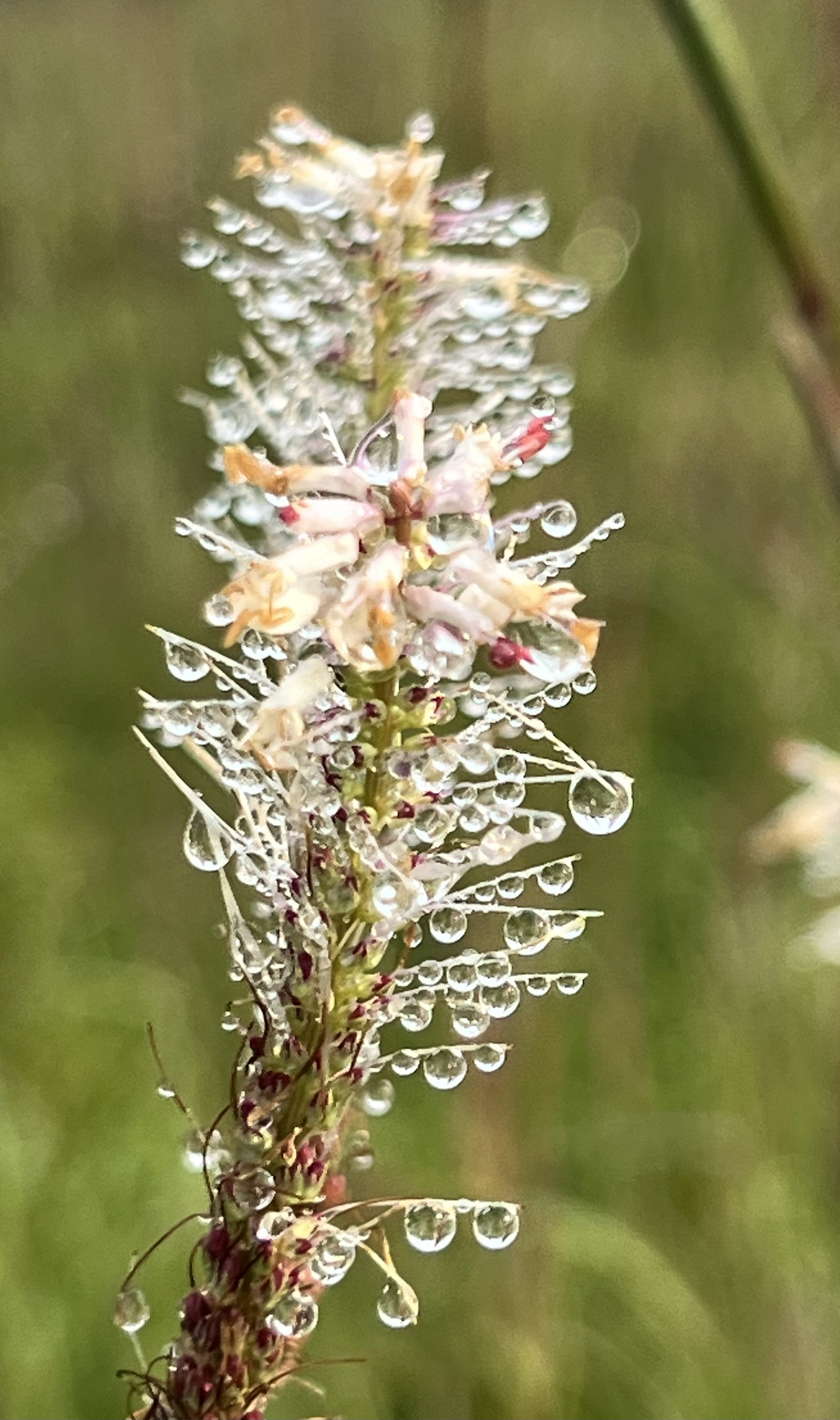
    A dewy morning flower
    Appleblossom Overlook Park
  • Cup plant
  • Compass plant
  • Rattlesnake master
  • Blackcaps
  • Dense blazing star
  • False sunflower
  • Anise hyssop
  • Grey-headed coneflower
  • Wild bergamot
  • Showy tickseed trefoil
  • Round leaf bushclover
  • Wild white indigo
  • Stiff goldenrod
  • Tall goldenrod
  • Canada goldenrod
  • Virginia mountain mint
  • Spiderwort
  • White panicled aster, pre-bloom
  • Brown-eyed Susan
  • Big bluestem
  • Smooth brome

Mound Prairie SNA - hill prairie 
  • Grooved flax
    Cylindrical blazing star
    Mound Prairie SNA

  • Cylindrical blazing star
  • Rough blazing star
  • Wood betony
  • Tall thimbleweed, past bloom
  • Purple prairie clover, past bloom
  • Wild bergamot
  • Round leaf bush clover
  • Hoary vervain
  • Harebell
  • Stiff goldenrod
  • Tall goldenrod
  • Spotted bee balm
  • False sunflower
  • Fewleaf sunflower
  • Grey-headed coneflower
  • Starry false Solomon’s seal
  • Canada goldenrod
  • Grey goldenrod
  • Prairie goldenrod
  • Downy painted cup
  • Flowering spurge
  • Partridge pea
  • Big bluestem

Holland Sand Prairie-dry sand prairie 
  • Hoary vervain
    A surprise in August - a hoary puccoon
    Holland Sand Prairie

  • Spotted bee balm
  • Poppy mallow
  • Hoary puccoon
  • False sunflower
  • Fewleaf sunflower
  • False boneset
  • Wild bergamot 
  • Rough blazing star
  • Common milkweed
  • Roundhead bush clover
  • Hairy aster, pre-bloom
  • Yarrow
  • Evening primrose
  • Hoary puccoon
  • Blue grama grass
  • Big bluestem grass
  • Yellow Indiangrass
  • Purple love grass
  • Hairy hawkweed
  • Side oats grama
  • Early goldenrod
  • Stiff goldenrod 
  • Narrow leaf four-o’clock
  • Partridge pea
  • Yellow salsify
  • White sagebrush

Whitewater State Park -hardwood forest, wetlands, hill prairie
  • Slender lip fern
    White and purple deceiver mushroom
    Whitewater State Park
  • Maidenhair fern
  • Lady fern
  • Interrupted fern
  • Bulblet bladderfern
  • Evening primrose
  • False sunflower
  • Fewleaf sunflower
  • Wild bergamot
  • Rough blazing star
  • Tall goldenrod
  • Narrowleaf hawkweed
  • White rattlesnakeroot
  • Sideways grama grass
  • Big bluestem grass
  • Canada wildrye grass
  • Jewelweed
  • Grooved flax
  • Cutleaf coneflower 
  • Grey-headed coneflower
    Zig-zag goldenrod
    Whitewater State Park

  • Small-flowered leafcup
  • Sweet Joe-Pye weed
  • Yellow giant hyssop
  • Tall thimbleweed
  • Purple prairie clover
  • False Solomon’s Seal, post-bloom
  • Bloodroot, post-bloom
  • Coral fungi
  • White and purple deceiver mushroom
  • Ghost pipe
  • Golden oyster mushroom
  • Pinewood gingertail mushroom
  • Chicken of the woods mushroom
  • Downy yellow violet, past-bloom
  • Zigzag goldenrod
  • Elmleaf goldenrod
  • Early goldenrod
  • Stiff tickseed
  • Tickseed trefoil
  • Tall cinquefoil, past-bloom
  • Devil’s darning needles
  • Harebell
  • Flowering spurge
  • Whorled milkweed
  • Smooth blue aster
  • Roundhead bushclover
  • Late boneset
  • Leadplant

Raymond Bice County Forest - coniferous and hardwood forest
  • Spotted bee balm
    A bee on spotted bee balm
    Raymond Brice County Forest

  • False sunflower
  • Self-heal
  • Rough blazing star
  • Hoary verbena
  • Leadplant
  • Old field balsam
  • Gray goldenrod
  • Butterfly weed
  • Black-eyed Susan
  • False Solomon’s seal
  • Braken fern
  • Lady fern
  • Roundhead bushclover
  • Purple lovegrass
  • Yarrow
  • Flowering spurge
  • White snakeroot
  • Grooved flax
  • Meadow hawkweed
  • Harebell
  • Sweet Joe-Pye weed
  • Ghost pipe

Trempealeau Wildlife Refuge - hardwood forest/wetland/dry sand prairie
  • Spotted bee balm
    Common mullein's beautiful flower - 
    Who knew?!?!
    Trempealeau Wildlife Refuge

  • Poppy mallow
  • Bergamot
  • Hoary Verbena
  • Partridge Pea
  • Swamp milkweed
  • Common milkweed
  • False sunflower
  • Black-eyed Susan
  • Brown-eyed Susan
  • Cup plant
  • Sensitive fern
  • Marsh fern
  • Eggs-and-butter (yellow toadflax)
  • Prairie cordgrass
  • White sagebrush
  • Purple prairie clover
  • Stiff sunflower
  • American white water lily
  • Common evening primrose
  • Common prickly ash
    American water lily
    Trempealeau Wildlife Refuge
  • Guelder-rose bush
  • Gray dogwood
  • Arrowhead viburnum
  • Great blue lobelia
  • Tall thimbleweed, past bloom
  • Roundleaf bittersweet
  • Canada goldenrod
  • Purple loosestrife
  • Swamp loosestrife
  • Flowering spurge
  • Leafy spurge
  • White meadowsweet
  • Tall boneset
  • Water smartweed
  • Giant chickweed
  • Prairie ironweed
  • American wild mint
  • Mullein
  • Calico aster, pre-bloom
  • Jumpseed
  • Jewelweed
Wildlife (seen, hear, detected)
  • Green heron
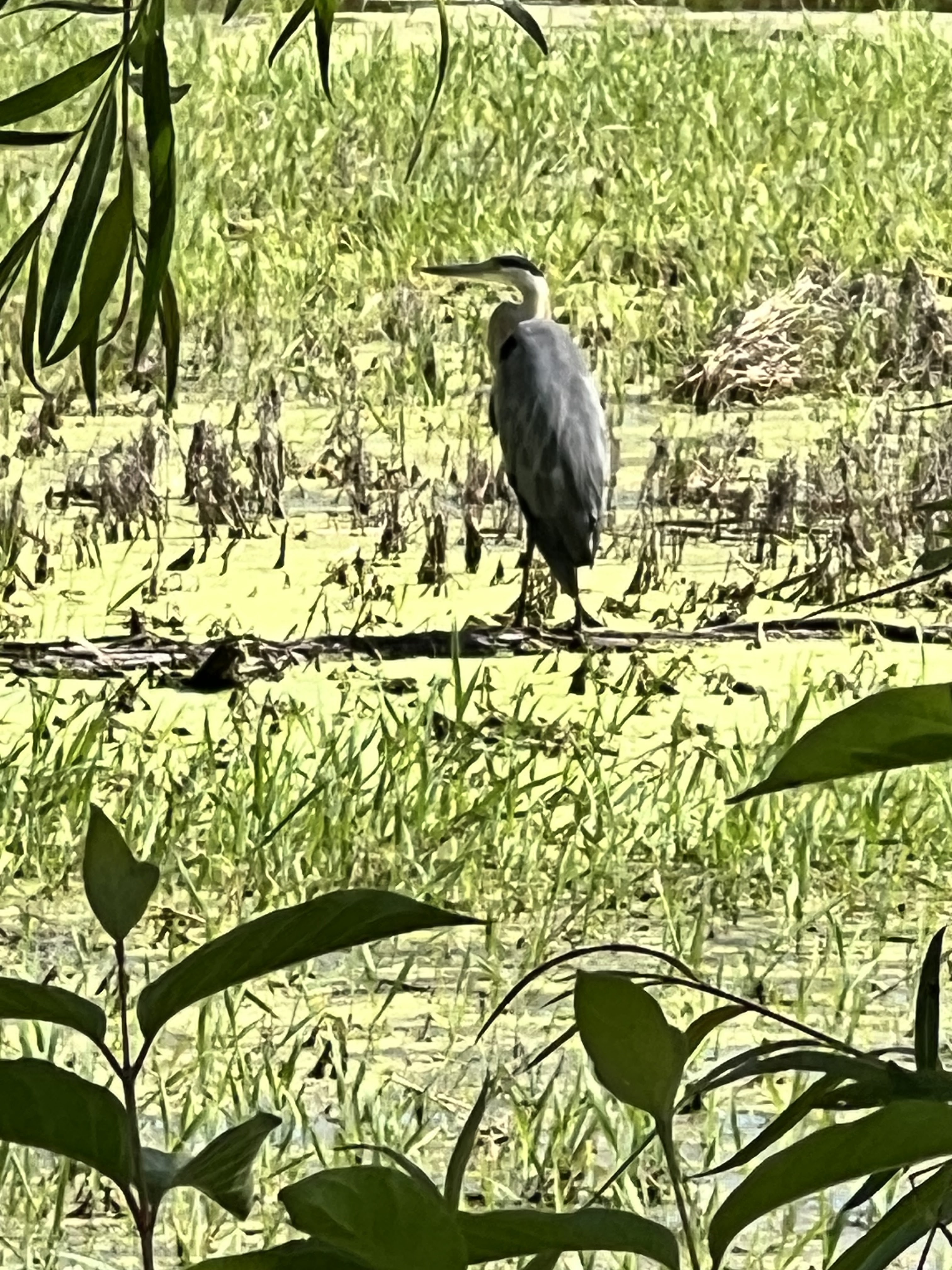
    Great blue heron
    Wagon Wheel Trail
  • Great blue heron
  • Sandhill crane
  • Barred owl
  • Pileated woodpecker
  • Downy woodpecker
  • Hairy woodpecker
  • Red-bellied woodpecker
  • Bell's vireo
  • Eastern kingbird
  • Baltimore oriole
  • Brown thrasher
  • Indigo bunting
  • Common yellowthroat
  • Cedar waxwing
  • American robin
  • American goldfinch
  • Gray catbird
  • Rose-breasted grosbeak
  • Great breasted flycatcher 
  • Red-winged blackbird
  • Song sparrow
  • House sparrow
  • Field sparrow
  • House wren
  • Hummingbird
  • Bluejay
  • Eastern wood pewee
    Pearl Crescent butterfly
    Trempealeau Wildlife Refuge
  • Northern Cardinal
  • White-breasted nuthatch
  • Brown thrasher 
  • American toad
  • Painted turtle
  • Tiger swallowtail
  • Twelve-spotted skipper
  • Eastern forktail damselfly
  • Black digger wasp
  • Black blister beetle
  • Monarch butterfly
  • Pearl Crescent butterfly
  • Black swallowtail butterfly


What are YOU noticing on your hikes?

Two weeks of hikes:
Hikes below in bold color or underlined have links to previous posts with descriptions/location of the trails
Appleblossom Overlook Park, La Crescent MN (2); Holland Sand Prairie, Holmen WI (2); Mound Prairie SNA, Hokah, MN; Whitewater State Park*, Altura MN; Raymond Bice County Forest, Mindoro WI; Upper Hixon Forest Prairies trail, La Crosse WI;, Wagon Wheel Trail, La Crescent MN; Riverside Park and International Gardens, La Crosse WI; Trempealeau National Wildlife Refuge, Trempealeau WI.
Getting all the pix
Image -Nola Larson

Enjoy this marvelous description of ALL the trails at Whitewater State Park from the Nature Impacts Us blog and website

The "I Spy on the Trails" column is a phenology (the study of seasonal changes in plants and animals) journal to chronicle year-round the weather, plant life and wildlife I observe while hiking. It is very useful in helping me compare observations from year-to-year. The column is published monthly from September through April and then twice-a-month from May through August when warm weather brings the natural world back to vibrant life.   

Images, unless noted - Marge Loch-Wouters

Wednesday, August 14, 2024

Trempealeau National Wildlife Refuge (WI) - Three Fine Ambles


I recently had the opportunity to re-visit three very easy - and quite contrasting - trails at the Refuge near Trempealeau WI. The two trails that start at the Visitor's Center are short one-mile trails that pack alot of interest and can be done in any season. The third trail begins just past the main gate entrance of the refuge and can be as long or short as you want. It's glory time is late spring/ summer. Perhaps nicest of all, these mostly flat trails are accessible for almost any age and ability.


Pine Creek Dike
 Trail- from the observation platform across from the Visitor's Center, head right into the woods on a mowed trail. You quickly come to a trail junction; take a left and head out onto the Pine Creek Dike. This low-lying trail is often damp and downright muddy. The water surrounds you as you head out a half-mile to it's end.

Along the way, you pass through hardwoods and numerous wetland and prairie plants. You also get to see some invasives like purple loosestrife and broadleaf bittersweet (formerly oriental bittersweett) that are taking over in many spots. In summer you will see some wonderful native plants still holing their place like swamp milkweed; marsh and sensitive ferns; hoary vervain; yellow toadflax; great blue lobelia; white meadowsweet, partridge pea; tall boneset and prairie ironweed.
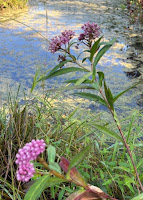
Swamp Milkweed

This is an especially lovely hike during spring and fall migrations when vegetation has died back and clear views of the sloughs and ponds bring you plenty of waterfowl action. At the the end of the hike there is a bench to sit and watch before heading back to the hike's beginning for a one-mile out and back.

I also appreciate this hike in summer because of the flower variety that comes up in the sandy and wet soils. The trail is probably at its driest during the summer although late fall if it's dry is also a bit drier.

Woods Loop Trail  - this trail begins at the Pike Creek trailhead by the Visitor's Center. When the trail splits, follow the "Nature Loop" sign that sends you straight ahead on the mowed grass trail. You will be in a hardwood forest with the water to your left as you follow the mostly flat, and occasional rolling trail. 

Small blind overlooking the water

About .4 of a mile down the trail there is a short spur to the left. Follow it to find a blind you can use to observe and photograph waterfowl. Continuing on another .1 mile, you come to a bench where you can sit and and rest or observe what is happening around you. You can continue on to make it a longer hike or use this as your turn around point to make it a one-mile amble.

Follow the trail back for about.15 of a mile and you'll come to a fork in the trail. Stay left and follow it back to complete the loop where you first started.

Spring and fall are my favorite times to hike this trail. There are some lovely ephemerals along this path along with migrating songbirds in spring and fall. With fewer leaves during those shoulder seasons, it is easier to see the water. Summer tends to have far more mosquitoes, gnats and biting flies and far fewer flowers along the way. 

Lupines everywhere

Prairie's Edge Tour Loop
- while this is primarily a "car tour" route, there is a hiking/biking trail next to it that let's you really enjoy this fabulous dry sand prairie. While the drive/hike clocks in at 4 miles, I usually just go through the prairie and then turn  around to make it an out-and-back of whatever length I choose (usually a total of 2-3 miles but you can do more or less).

This prairie is justly celebrated as one of the premier locations to see the late spring blooms of the wild lupine. If you go in late May and early June, you will be treated to carpets of these beauties. You will also find a plethora of other prairie plants like hoary puccoons, poppy mallows, bergamot, spotted bee balm, blazing stars, bluebells , asters, coneflowers, cup plants and so much more. The rolling sand dunes are alive with native plants from May through fall. 

The trail is almost completely flat except for one rolling hill. Across from the sand dunes you can also see ponds and wetlands. Bike traffic is light and there is no problem sharing the trail.


Pine Creek trail view of river and bluffs

THE HIKES
The two hikes from the Visitor's center are a short one-mile each on mostly flat trails. Pine Creek Dike is an out-and-back and the Woods Loop which splits off from the dike trail contains a loop in the middle. Summer is great for the Pine Creek portion while fall and spring with migrating songbirds and waterfowl are great times for the Woods Loop which contains a viewing blind. The Prairie's Edge Loop has it's own hike/bike trial and is best as an out-and-back. Pick your length and enjoy an amazing dry sand prairie with successions of native wildflowers from May through fall. These trails are great for families and accessible for hikers of almost any ability.

Woods Loop trail


The Location
W228488 Refuge Road, Trempealeau WI
The Refuge lies just south of WI Hwy 35/54 between Centerville and the bridge to Winona. Turn south on West Prairie Rd and continue until you see the Trempealeau Wildlife sign where you turn right on Refuge Rd. Drive until you go through n open low gate. There is a parking lot just beyond it for the Prairie's Edge Loop Trail. For the other two trails, continue on and park by the Visitor's Center. The Pine Creek Dike Trail and Woods Loop Trail start to the right of the observation deck.

Additional posts describing Trempealeau Wildlife Refuge trails:

All images, unless noted - Marge Loch-Wouters

Looking for more area hikes? Please stop by the web version of the blog and under the "Labels" tab on the right hand side of the blog, click on "find-a-hike". There are over 75 hike descriptions and lists of hikes to try!

Along the Pine Creek trail


Thursday, August 1, 2024

I Spy on the Trails - July 16-31, 2024

Zoerb Prairie
Upper Hixon Forest
It's been a pretty typical July, weather-wise, in the last two weeks - a little dry and temps hovering in high 70's to high 80s. We ended the month with two truly hot and steamy days. We've had many early morning fog days. It's been plenty humid, plenty sunny and storms have danced to the north and south of it. We've had more wind than usual in these two weeks but also some extremely still days. So, yup, July.

The rivers and creeks are past their crests and going down everywhere. It was so unusual to have those early summer flooding events due to the heavy May-June rains. It definitely speaks to our changing climate and what we can expect going forward. We were spared the brutal heat that many experienced across the U.S. and worldwide here in MN. But there is no guarantee going forward.

Mosquitoes and gnats are still out and about but the prairie and pollinator flowers make being soaked in DEET tolerable. My last few hikes have focused on earlier start times to beat the heat. That will no doubt continue through most of August.

Up on Rogala's Prairie 

I'm always a little surprised at how many times I hit the trails each time I work on these phenology posts. Between guided field trips, scouting and exploring new trails and trying to hit the best of the prairie hikes, I'm out most days.

Hope your hiking is going great too! 

Just a reminder, if you are looking for hiking destinations there are over 50 hikes with detailed information/directions in the blog. To find them, just look on the right hand side of the blog under labels and click on the "find-a-hike" tab. I usually add a hike or two per month to that list!


Plants
Beaver Creek State Park, hardwood forest
  • Bergamot
    The delicate flower of the hairy pagoda plant
    Beaver Creek Valley State Park

  • Small flowered leafcup
  • Lady fern
  • Crested woodfern
  • Bulblet badderfern
  • Roundlobe hepatica, past bloom
  • Mayapple, past bloom
  • Giant chickweed
  • Hairy pagoda plant
  • American bellflower
  • Motherwort
  • Self-heal
  • Tall hairy agrimony
  • Canada goldenrod
  • White avens
  • Wild parsnip, past bloom

A Bluff in Richard J. Dorer Forest hardwood forest
  • Deadman’s fingers
    Deadman’s fingers fungi

  • Wild bergamot
  • White snakeroot
  • Grey-headed coneflower
  • Leadplant
  • Lady fern
  • Interrupted fern
  • Bulblet bladderfern
  • Bracken fern
  • Maidenhair fern
  • Rough blazing stat
  • Woodland sunflower
  • Few-leaf sunflower
  • Tall hairy agrimony
  • White prairie clover
  • Purple prairie clover
  • Flowering spurge
  • False Solomon’s s seal
  • Butterfly weed
  • Oxeye daisy
  • Mullein
  • Harebell

Rogala’s Prairie - hill prairies, hardwood forest
  • Big bluestem grass
  • Little bluestem grass
  • Bottlebrush grass
  • Purple coneflower
  • Grey-headed coneflower
  • Spotted beebalm
  • White prairie clover
  • Oxeye daisy
  • Black-eyed Susan
  • Hoary vervain
  • Spiderwort
  • Wild bergamot
  • Wild white indigo
  • Woodland sunflower
  • American spikenard 
  • Smooth cliffbrake
    Smooth cliffbrake
    Rogala's Prairie
  • Canada goldenrod
  • Stiff goldenrod
  • Showy goldenrod
  • Showy tick-trefoil
  • St. John’s wort
  • Rattlesnake master
  • Michigan lily
  • White snakeroot
  • Bracken fern
  • Lady fern
  • Cinnamon fern
  • Bulblet bladderfern
  • Cream gentian
  • Yellow gentian
  • Compass plant
  • Tall cinquefoil
  • Culver’s root
  • Cylindrical blazing star
  • Leadplant
  • Harebell
  • Pennsylvania sedge
  • Canada frostweed
  • Prairie coreopsis
  • Porcupine grass
  • Wormwood
  • Pasque flower, past  bloom
  • Few-leafed sunflower
  • Grooved yellow flax 
  • Sand cherry
  • Smooth aster, pre-bloom 
  • False Solomon’s seal
  • Wild sarsaparilla 
  • Common milkweed
  • Whorled milkweed
  • Boneset
  • Lyreleaf rockcress
  • Bellflowers
  • Sleepy catchfly 
  • Chicken of the woods

Hixon Forest Prairies - hill prairies/hardwood forest
  • Ghost pipe
  • Wild bergamot
    Emerging ghost pipe
    Hixon Forest

  • Grey-headed coneflower
  • Rough blazing star
  • Leadplant
  • Big blue stem grass 
  • Canada wildrye grass
  • Smooth brome grass
  • Side grama oats
  • Whorled milkweed
  • Common milkweed
  • Woodland sunflower
  • Mullein
  • Hoary verbena

  • Purple prairie clover
  • White prairie clover
  • Tall cinquefoil
  • Grooved flax
  • Tall boneset
  • False boneset
  • Evening primrose
  • Butterfly weed
  • White snakeroot
  • Stiff goldenrod
  • Elmleaf goldenrod
  • Culver’s root
  • American germander
  • St. John’s wort
  • Tall thimbleweed
  • Interrupted fern
  • Lady fern

Holland Sand Prairie - sand prairie
  • Wild bergamot
  • Purple prairie clover
  • White prairie clover
  • Spotted bee balm
  • Poppy mallow
    Poppy mallow
    Holland Sand Prairie

  • Evening primrose
  • Rough blazing star, pre-bloom
  • White sagebrush
  • Clasping milkweed
  • Whorled milkweed
  • Common milkweed
  • Hoary alyssum 
  • Autumn hawkbit
  • Flowering spurge
  • Leafy spurge
  • Mullein
  • Yarrow
  • Grey-headed coneflower
  • Purple coneflower 
  • Ground cherry
  • Tall thimbleweed
  • Big blue stem
  • Switchgrass
  • Purple lovegrass
  • Prairie dropseed
  • Deptford pink
  • Partridge pea
  • Roundhead bush clover
  • Leadplant
  • Grooved flax
  • Black-eyed Susan
  • Partridge pea
    Partridge Pea
    Holland Sand Prairie

  • Few-leaf sunflower 
  • Stiff sunflower
  • False sunflower
  • Hoary puccoon
  • Hairy aster, pre-bloom
  • White heath aster, pre-bloom 
  • Wild four-o-clock
  • Flowering spurge
  • Early goldenrod
  • Stiff goldenrod
  • Giant goldenrod, pre-bloom
  • Virginia dwarf dandelion
  • Narrowleaf hawksbeard
  • Oxeye daisy
  • Tall cinquefoil 

Appleblossom Overlook Park -  prairie/hardwood forest
  • Rattlesnake master
    Dew "flowers" on Culver's Root
    Appleblossom Overlook Park

  • Bergamot
  • Wild cream indigo
  • Stiff goldenrod
  • Showy goldenrod
  • Tall goldenrod
  • Tall thimbleweed
  • Slender mountain mint
  • Culver's root
  • Cup plant
  • Compass plant
  • White sagebrush
  • False sunflower
  • Grey-headed coneflower
  • Prairie blazing star
  • Cattails
  • Big blue stem grass
  • Floering spurge
  • Evening primrose
  • Showy tick-trefoil
  • Canada goldenrod
  • Black-eyed Susan
  • Brown-eyed Susan
  • Spiderwort


Wildlife
  • Baltimore oriole
  • Eastern towhee
    Common aerial yellowjacket 
    on whorled milkweed plant

  • Common yellowthroat
  • Sandhill crane
  • Wild turkeys
  • Eastern wood pewee
  • Brown-headed cowbird
  • Tufted titmouse
  • Bluebird
  • American Robin
  • White-breasted nuthatch
  • Red-eyed video
  • Indigo bunting
  • Western meadowlark
  • Indigo bunting
    Indigo bunting
    Hixon Forest

  • Field sparrow
  • House sparrow 
  • Song sparrow
  • Chipping sparrow
  • American goldfinch
  • House finch
  • House wren
  • Cedar waxwing
  • Northern cardinal
  • Red-wing blackbird
  • American crow
  • Brownbelted butterfly
  • Aerial Yellowjacket
  • Great black digger wasp
  • Eastern swallowtail
  • Tiger swallowtail
  • Monarch butterfly

What are YOU noticing on your hikes?

Two weeks of hikes:
Hikes below in bold color or underlined have links to previous posts with descriptions/location of the trails
Necedah National Wildlife Refuge, Necedah WI; Beaver Creek Valley State Park, Caledonia MN; Vetsch Park, La Crescent MN (trail maintenance and invasives control) (2); Pickwick Quarry, LaMoille, MN: Rogala Prairie, Rockland, WI; Upper Hixon Forest Prairies trail, La Crosse WI (2); Holland Sand Prairie, Holmen WI; Riverside Park and International Gardens, La Crosse WI (2); Lock & Dam 7 Rest Stop trails, Dresbach MN; Appleblossom Overlook Park, La Crescent MN. 

On top Appleblossom Prairie looking down on the fog below

The "I Spy on the Trails" column is a phenology (the study of seasonal changes in plants and animals) journal to chronicle year-round the weather, plant life and wildlife I observe while hiking. It is very useful in helping me compare observations from year-to-year. The column is published monthly from September through April and then twice-a-month from May through August when warm weather brings the natural world back to vibrant life.  

Images, unless noted - Marge Loch-Wouters